




Used by regulated busineses
- Banks
- Payments
- Brokerages
- Remittance
- Card Issuers
- Asset Managers
- FinTechs
- Exchanges
- Payroll
Integrate compliance without the complexity
Dedicated blockchains can avoid app-by-app enforcement and costly manual checks so your team can enforce rules more consistently and stay focused on building.

Choose the screening provider of your choice
Integrate with providers that meet your risk, regulatory, and operational requirements.

Define your restrictions and access lists
Configure permissions to control which users or groups can and cannot interact with the chain or specific smart contracts.

Export reports to meet your audit requirements
Generate the records to support internal reviews, partner diligence, and regulatory audits.
The backbone of your policy enforcement
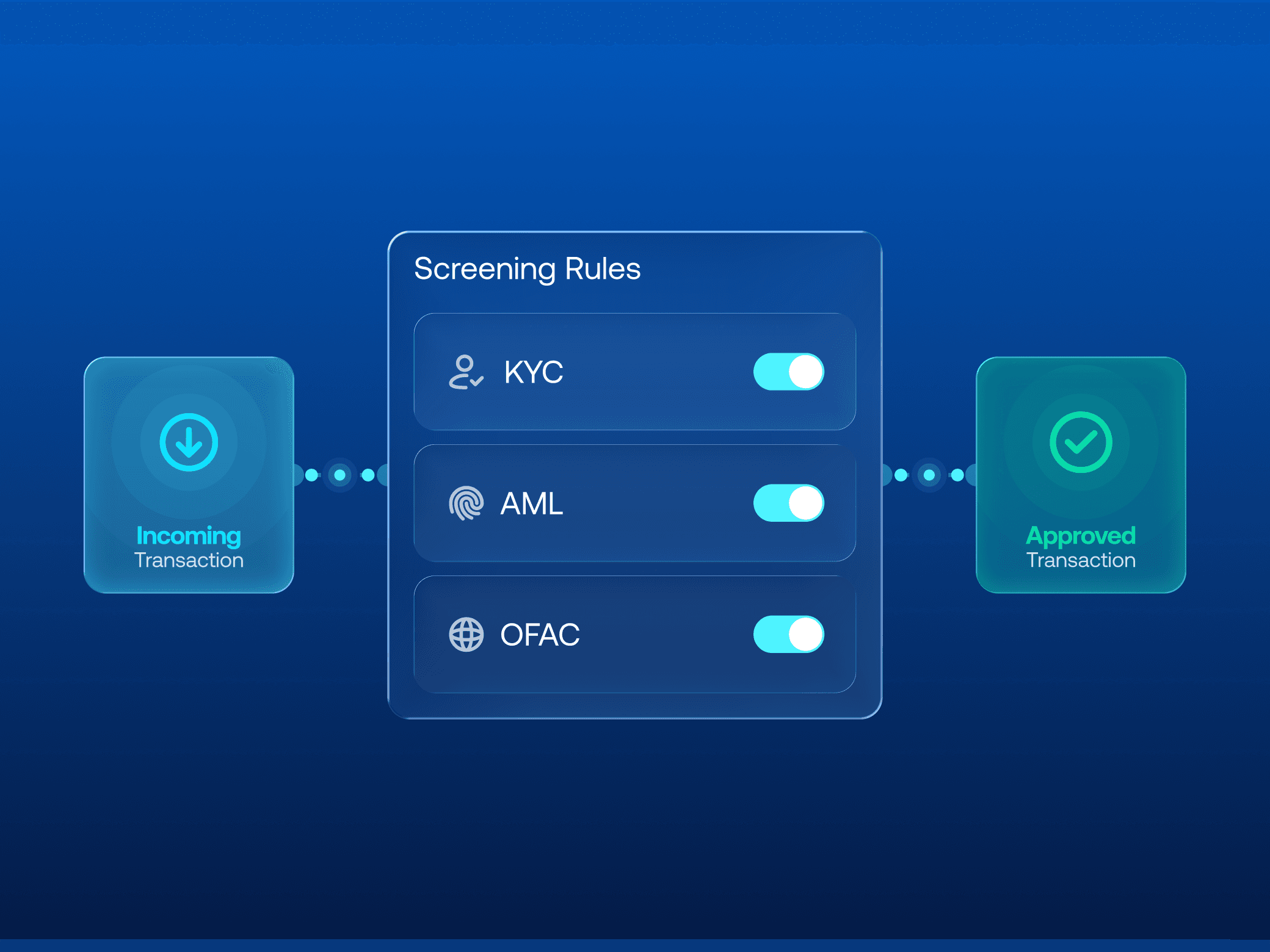
Chain Screening
Configure the screening rules for your business
Connect your screening provider and inherit the restriction parameters that fit your policy, from directly restricted addresses to broader exposure-based criteria.
Are you a provider? Become a partner →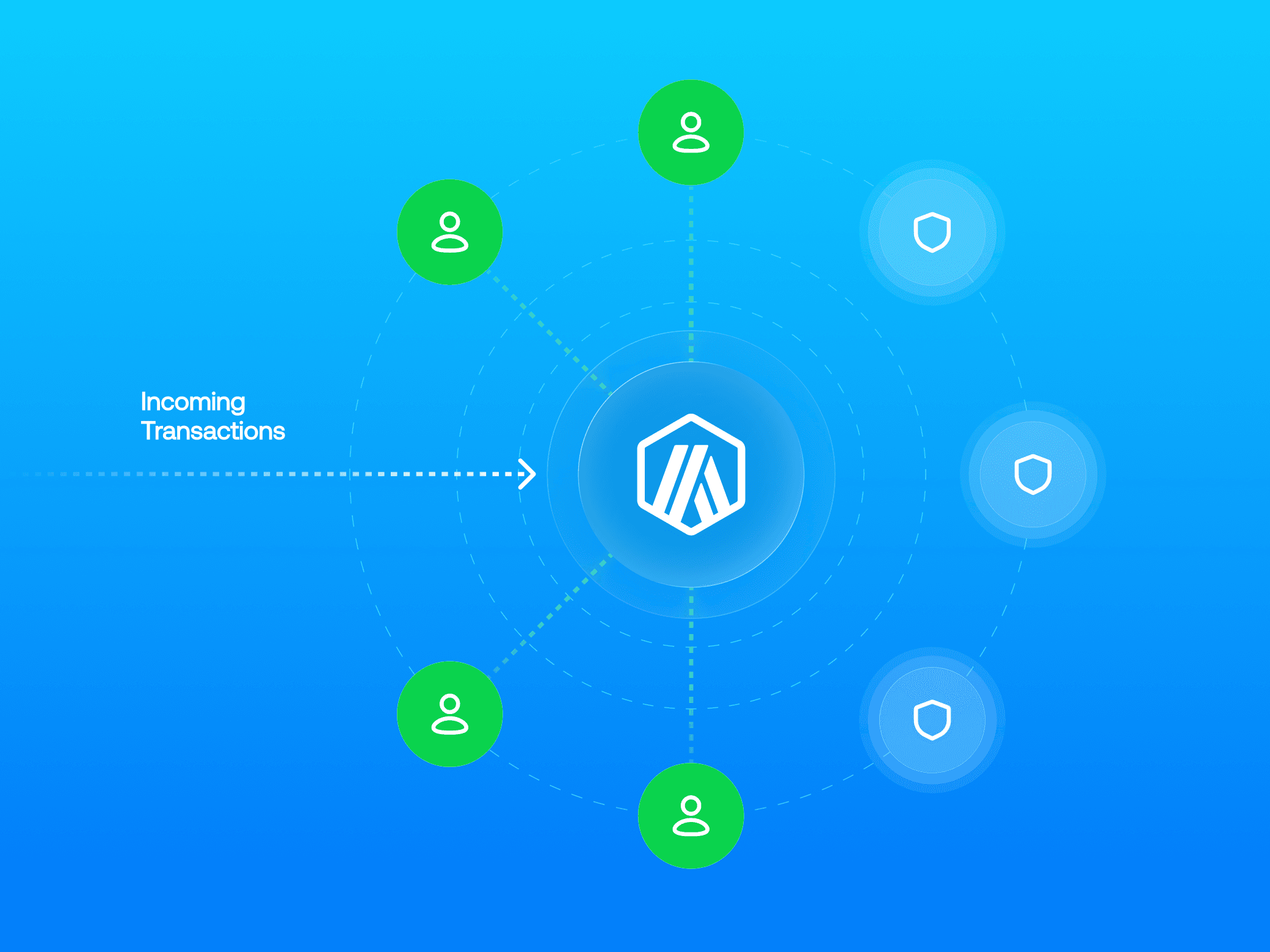
Access Lists
Whitelist which participants are permitted to interact
Specify which users, teams, or counterparties are allowed to interact with your product, helping your business enforce internal access policies more consistently.
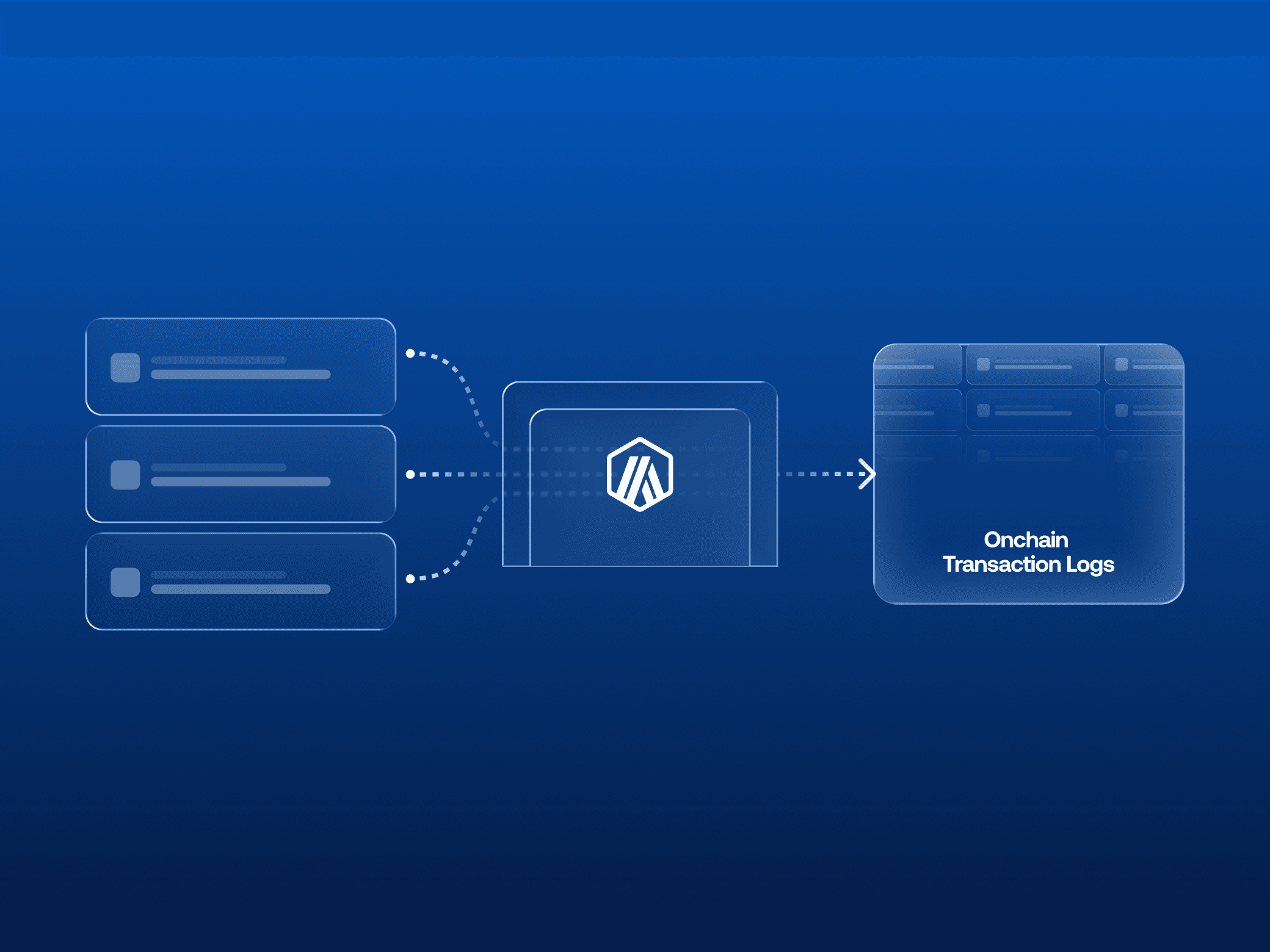
Continuous Monitoring
Restriction lists are updated dynamically across your product surface
When policies change, restriction lists are automatically updated across every transaction touchpoint so enforcement can stay aligned with your requirements.
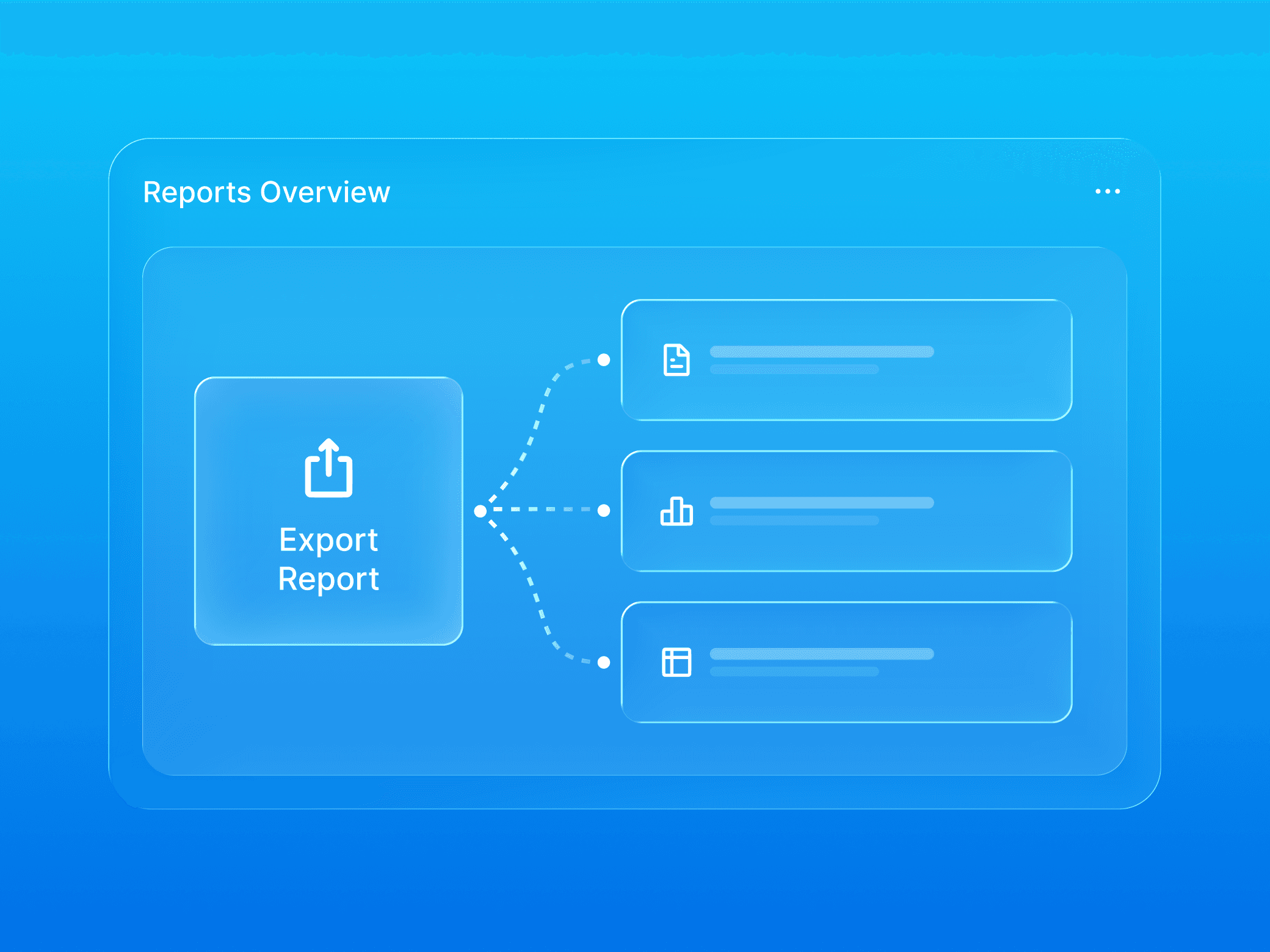
Real-Time Reporting
Export records for review and auditing
Export records of blocked addresses and transaction activity to support audit logs, internal review, and reporting requirements.
Build with confidence
Talk to our team about designing compliance controls for your product.
Frequently Asked Questions
What does Arbitrum enforce for us, and what remains our responsibility?
Arbitrum Platform provides the protocol-level enforcement engine to control which users or groups can and cannot interact with your chain or specific smart contracts. Your responsibility is to define the rules of the road: you select your preferred compliance provider and manage your restricted address lists.
What compliance controls can we configure?
You have full flexibility to define which actors can interact with your chain. This includes maintaining a restricted access list that identifies unwelcome actors, as well as setting custom compliance rules for specific scenarios, such as delegated approvals or asset-burning exceptions. These rules can be applied at the protocol-level so compliance is active before a transaction is ever finalized.
Which screening providers can we integrate with?
The Arbitrum Platform is provider-agnostic. While the platform is compatible with industry leaders like TRM Labs, the platform is designed to work with providers like Chainalysis and Elliptic. Because Arbitrum uses a standardized data delivery method, you can route compliance intelligence to the third-party tool or internal risk system that best fits your workflow.
How does real-time reporting work?
Reporting is push-based and dynamic. If a transaction attempts to interact with a restricted address, it generates a detailed event report and sends it to your designated compliance endpoint. This eliminates the need for manual polling and ensures your team has the data you need the second a policy violation is attempted.
What happens operationally when activity is restricted?
The transaction is automatically rejected before it can be processed or added to a block. Simultaneously, a secure report is dispatched containing the transaction hash, the addresses involved, and the specific reason for the block. To help ensure that your audit trail doesn’t break, the system will retry delivery until your endpoint confirms the report has been successfully received.
Discover the full suite of Arbitrum capabilities helping businesses bring their products to life.



Stay in touch


