



Confidentiality that protects your competitive edge

Built with financial businesses in mind
- B2B Payments
- Remittances
- Tokenized Assets
- Credit Markets
- Commodities
- Derivatives
- Stablecoins
- Swaps
- Fixed Income Bonds
- B2C Payments
- Spend Cards
- Global Payroll
Two ways to apply confidentiality on Arbitrum
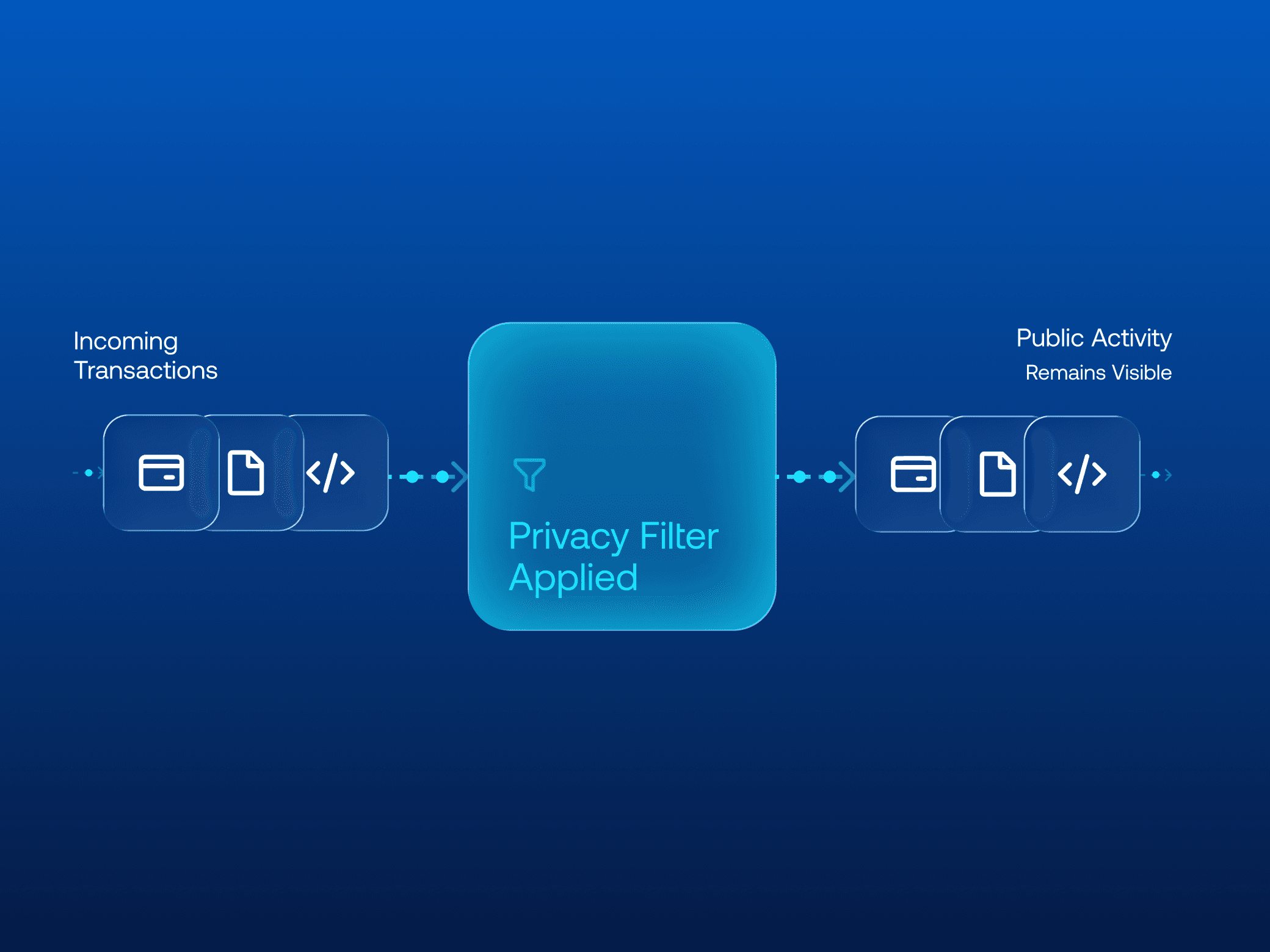
Available today
Application-level confidentiality
Tailor your application’s privacy profile by integrating specialized third-party tools that allow you to shield specific data components or proprietary logic as needed.
✓ Prove transactions are true without sharing the data
✓ Run calculations on data while it remains encrypted
✓ Protect sensitive code in hardware-secured “vaults”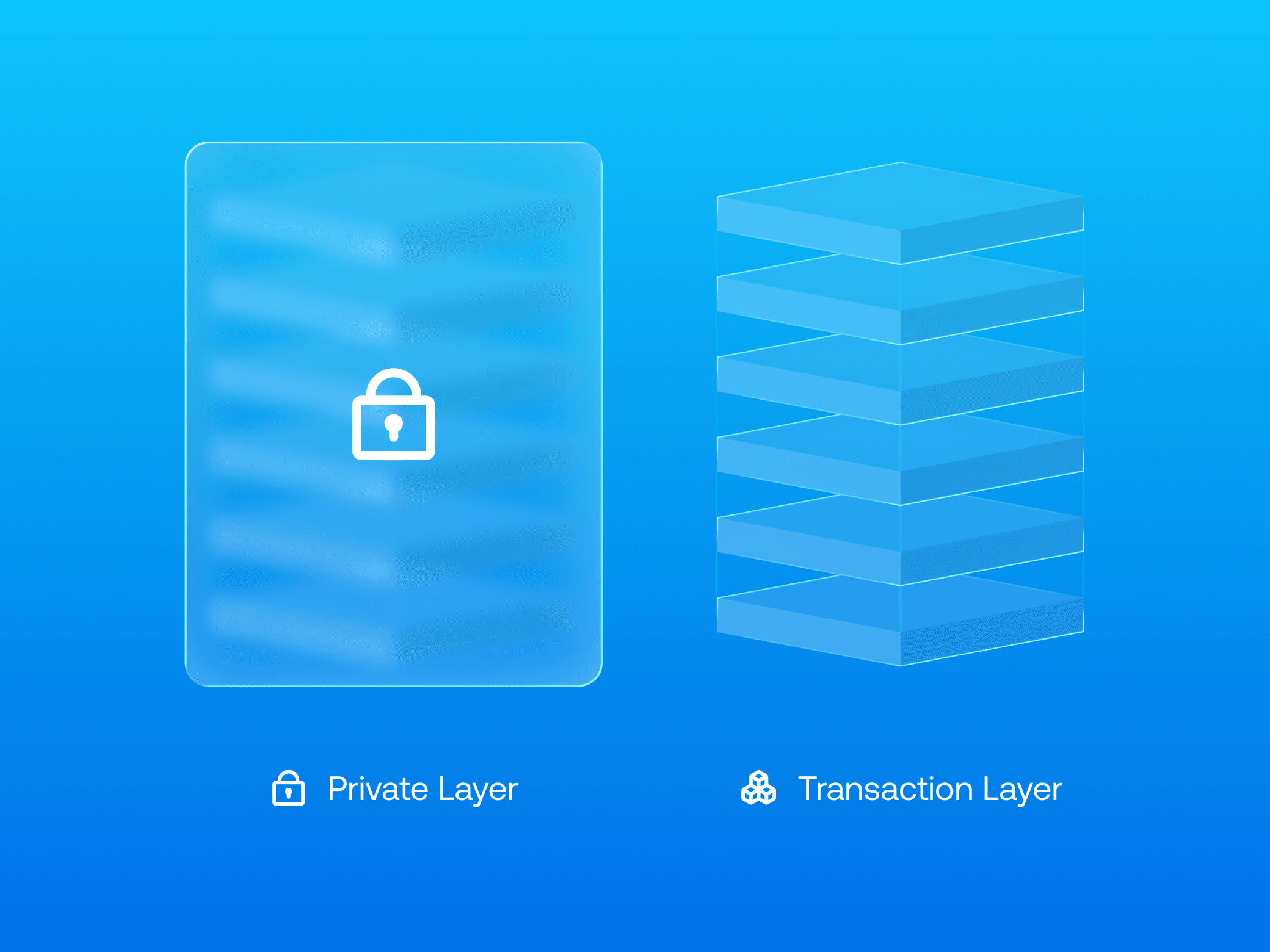
Coming soon
Privacy across your dedicated blockchain
Deploy a dedicated blockchain where activity can be confidential by default across the network. Operators can still retain visibility for oversight and compliance, but applications require specialized designs to adhere to this model.
✓ Best for products with stricter confidentiality requirements
✓ Requires specialized application design
Give stakeholders the right level of visibility
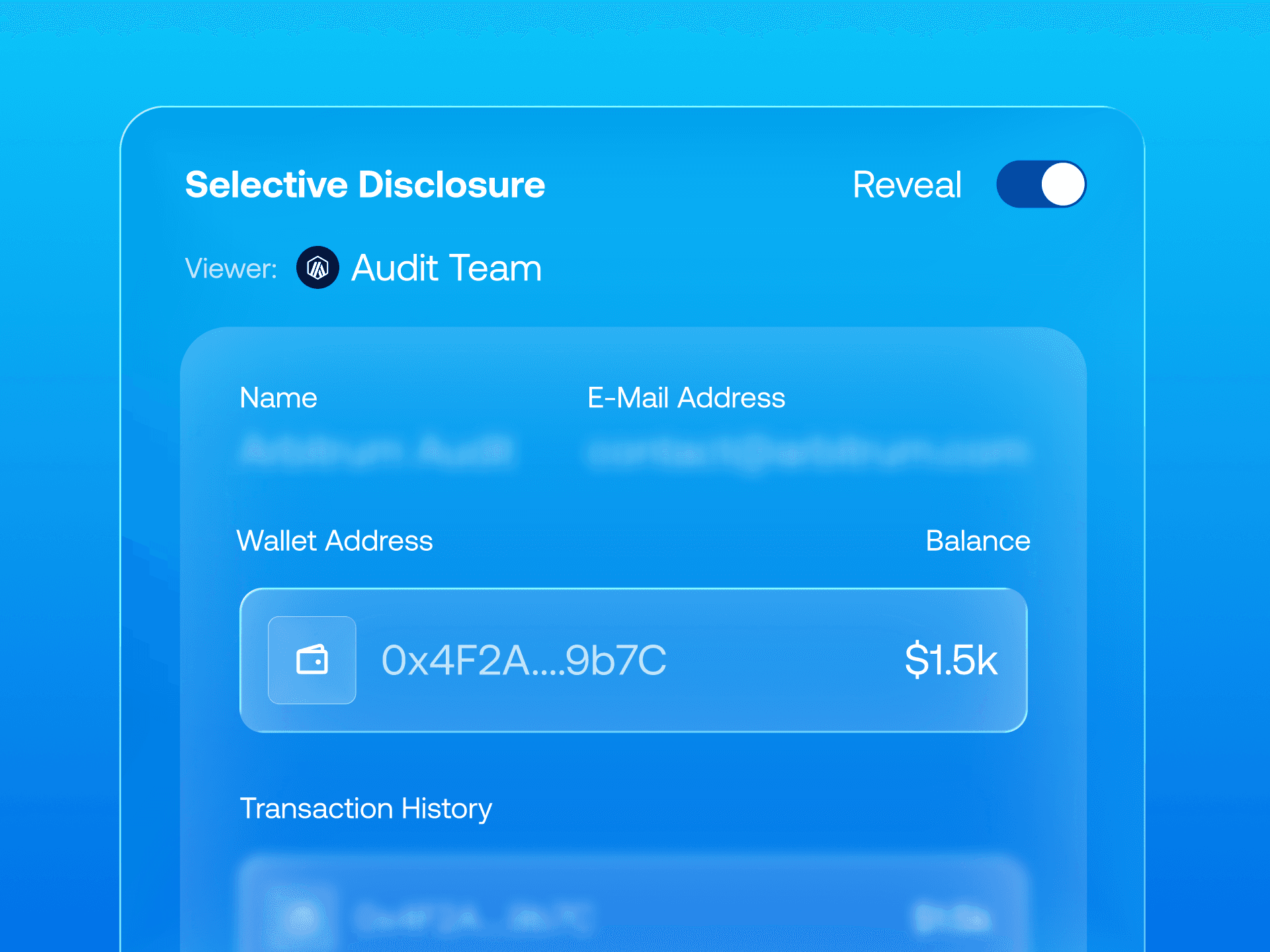
Selective Disclosure
Define what users, operators, auditors, regulators, internal teams, and approved partners can access, so sensitive activity stays protected while oversight requirements are still met.
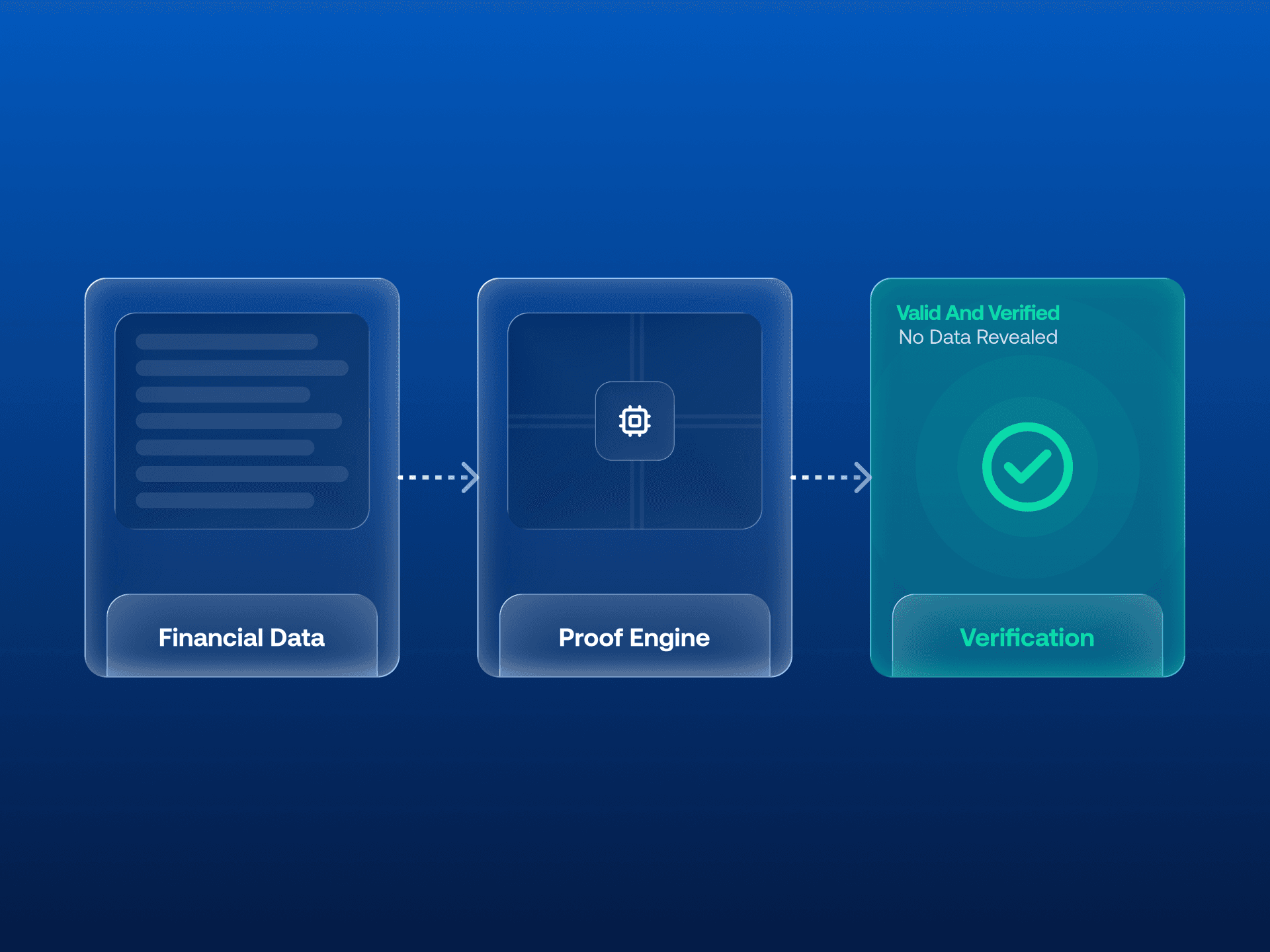
Confidential Activity
Support privacy-preserving product environments where sensitive holdings, transfers, positions, and transaction relationships do not become visible to the broader market by default.
See how businesses achieve confidentiality with Arbitrum
Build with confidence
Talk to our team about designing the right confidentiality model for your product, users, and operating requirements without disconnecting from the infrastructure and oversight your business needs.
Frequently Asked Questions
Who can still see the data?
If you’re deploying an application on the public Arbitrum One chain, you can build applications that keep activity confidential from the public while still allowing approved operators or authorized stakeholders to access key information. If you deploy a dedicated blockchain, you can choose to keep contracts public and reduce exposure of user identity and transaction origin during interaction. Alternatively, a dedicated blockchain can also be designed with confidentiality across the entire network.
What exactly can be kept confidential?
Depending on the confidentiality model you build with, data privacy can apply to balances, transaction flows, counterparties, user identity during contract interaction, smart contract logic, or state data. Arbitrum also offers the ability to make selective disclosures, so approved operators, auditors, regulators, or internal teams can access the information required for oversight without exposing sensitive activity to the broader market.
Are products with data confidentiality EVM-compatible?
This depends on which supported model you build with. Confidentiality applied on public applications can preserve more compatibility with standard EVM tooling and smart contracts. Alternatively, fully confidential blockchains may require additional configuration to achieve EVM compatibility.
What’s the difference between Zero-Knowledge proofs, FHE, and TEE?
Zero-Knowledge proofs (ZK), Fully Homomorphic Encryption (FHE), and Trusted Execution Environments (TEE) represent different methods for protecting data privacy. ZK allows a party to prove a statement is true without revealing the underlying sensitive information; FHE enables complex calculations to be performed directly on encrypted data without ever decrypting it; and TEEs use specialized hardware to create a secure "enclave" where data is processed in isolation from the rest of the system. In short, ZK focuses on verification, FHE on mathematical privacy during computation, and TEE on hardware-level isolation.
What is available on Arbitrum today?
Today, confidentiality can be applied to applications on Arbitrum One or on your custom blockchain using standard tooling provided by third parties. Though not live yet, alternative data confidentiality models are being designed for dedicated blockchains and will depend on the architecture and deployment requirements of your product.
Discover the full suite of Arbitrum features helping businesses bring their products to life.


Stay in touch


