




High-performance infrastructure for onchain finance
Near-instant 100ms response times, capacity of up to 6000TPS built for global demand, and cost reductions of 98% as usage spikes.
Sub-second Latency
100ms response times for onchain payments, transfers, and redemptions give your customers a best-in-class UX.
Capacity for Global Demand
With capacity up to 6,000 TPS, Arbitrum keeps high-volume financial workflows moving during busy periods. On peak demand days, it handles 2.4x more capacity than competing chains.
Predictable Costs Under Load
Reduce price spikes by 98%, with transaction prices 17x less volatile and 15% lower than competing networks during high demand. Median transaction costs are currently $0.0043.
Proven under peak demand
Arbitrum already supports institution-grade transaction volume, real economic activity, and consumer products operating at scale.

Supports real market activity
The Arbitrum Platform currently secures over 45% of the total value across Ethereum Layer 2s and has enabled over $225B in exchange volume in the past 12 months.

Built for customer-facing reliability
Reliability matters when products have real users, live flows, and operational deadlines. Arbitrum has settled over 2.4B lifetime transactions, giving builders a production-tested environment for applications where every transaction is part of the customer experience.
Performance for your financial use case
From payments and payroll to exchanges and tokenization, Arbitrum helps financial products stay responsive as demand grows, with transaction costs that remain more stable and predictable under load.
Tokenized Assets
Bring fund, securities, and RWA workflows onchain with infrastructure built for regulated financial activity. Arbitrum helps issuers, asset managers, administrators, custodians, broker-dealers, and trading platforms manage ownership records, eligibility checks, subscriptions, transfers, redemptions, distributions, reporting, lifecycle events, and settlement with predictable execution as demand scales.
Trading
Build active markets where collateral, orders, fills, margin updates, liquidations, fees, and settlement run in programmable software. Arbitrum gives trading venues the low-latency execution, throughput, and cost predictability needed to keep markets responsive during volatile periods, when bursts of activity put the most pressure on infrastructure.
Payments
Move value across markets with the performance profile needed for remittances, marketplace payouts, supplier payments, payroll, and treasury flows. Arbitrum helps payment teams initiate transfers, apply policy checks, split fees, record settlement, and reconcile activity without exposing operators or users to sudden cost spikes during large payout runs.
Consumer Finance
Add wallets, balances, rewards, payments, and onchain financial access inside consumer products without making users manage blockchain mechanics. Arbitrum supports the background transaction flows these products depend on, including wallet creation, gas sponsorship, balance updates, transfers, rewards, and settlement, so apps can feel instant while infrastructure keeps costs predictable as usage grows.
Ship advanced financial products faster
As finance and markets become programmable, the Arbitrum Platform lets businesses bring richer business logic onchain while improving speed, cost control, and production safety.
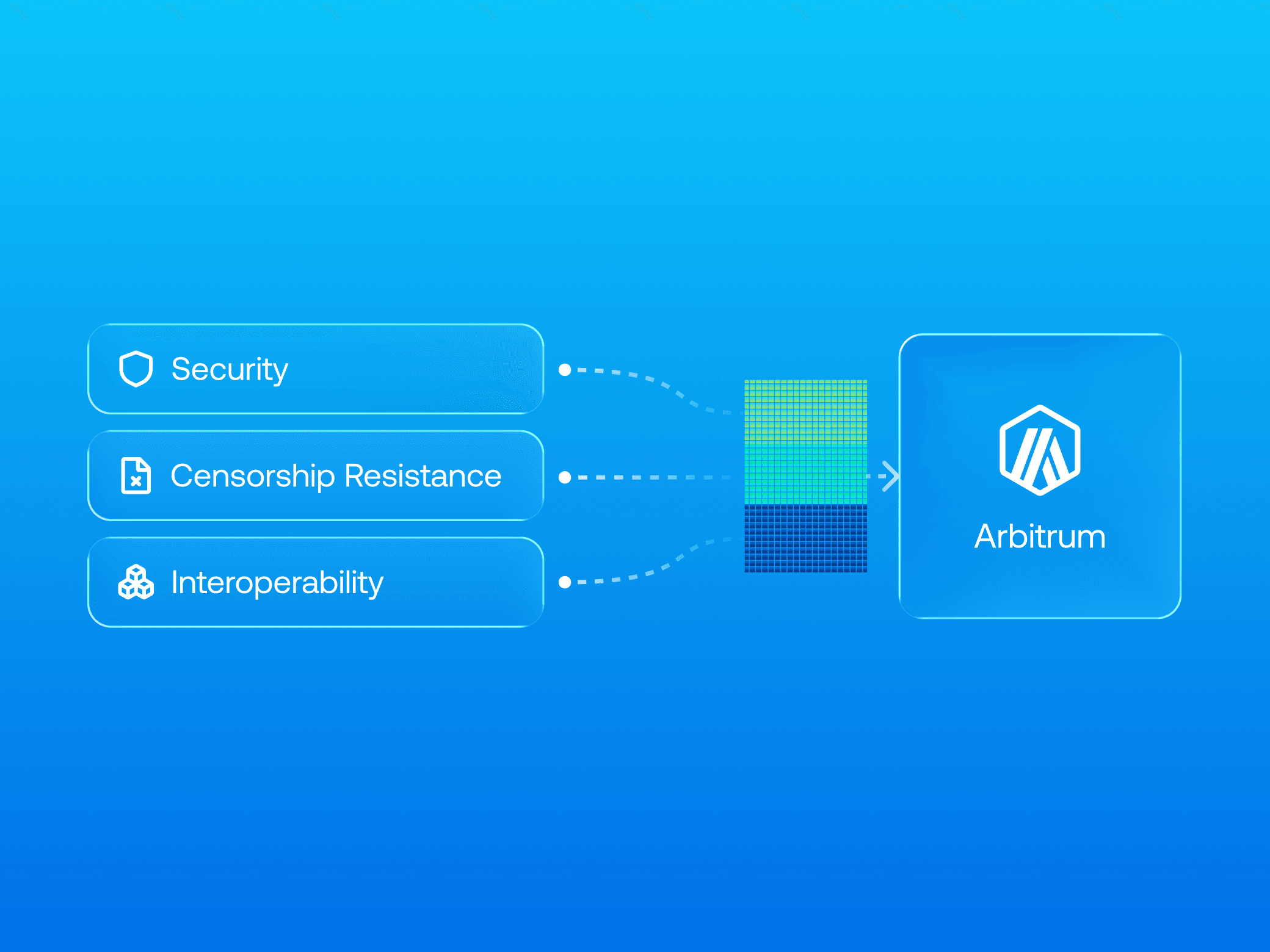
Institutional-grade architecture without unnecessary tradeoffs
Get the benefits of building on the blockchain: security, interoperability, and censorship resistance without compromise. Arbitrum’s unique execution model is designed to preserve those guarantees while making complex applications more practical to ship.
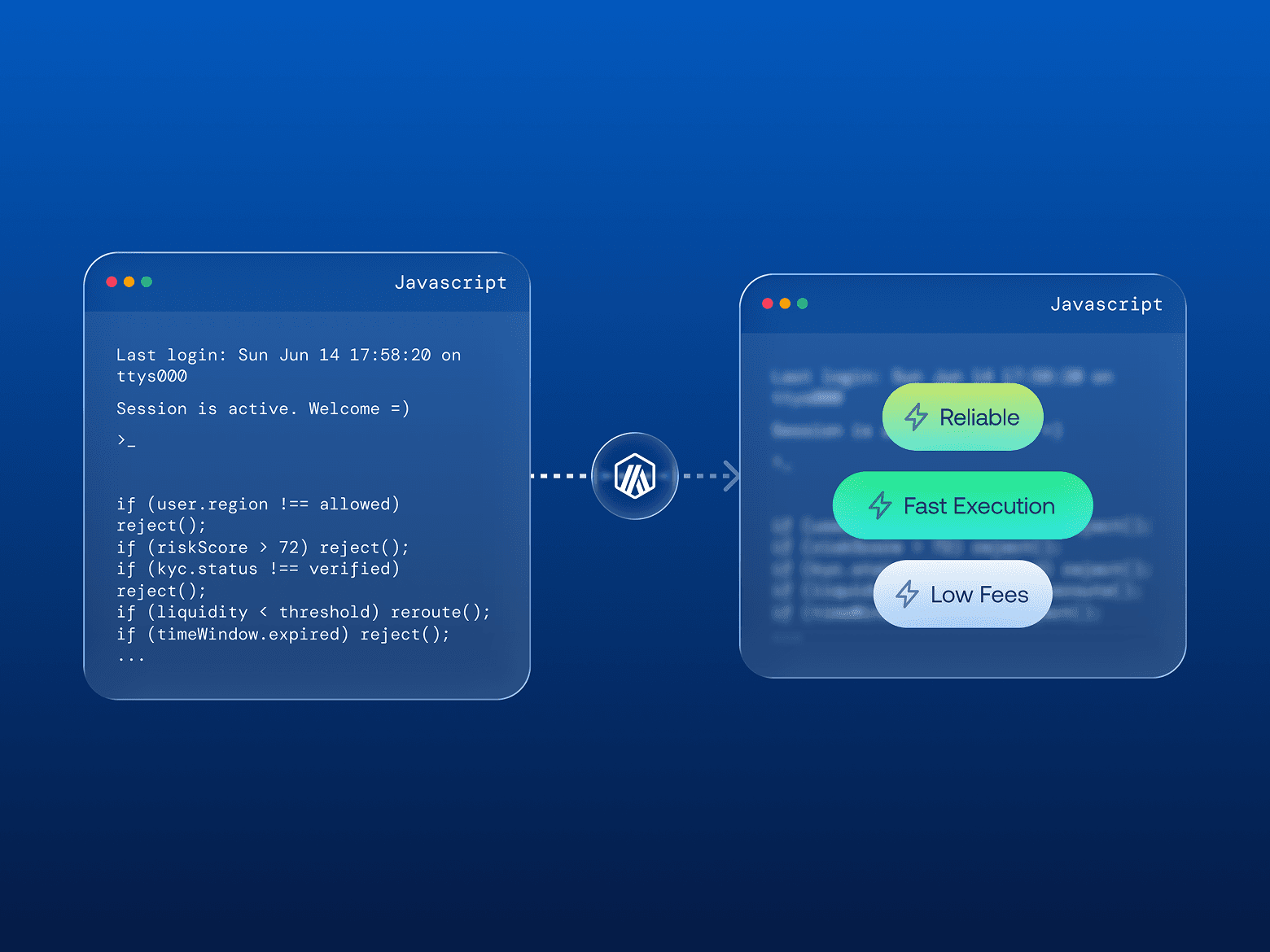
More programmable financial products
Support custom pricing, verification, and business logic that would be harder or more expensive to express in the EVM alone. The Arbitrum Platform expands what teams can realistically run onchain while keeping full EVM compatibility in a way like no other chain can.
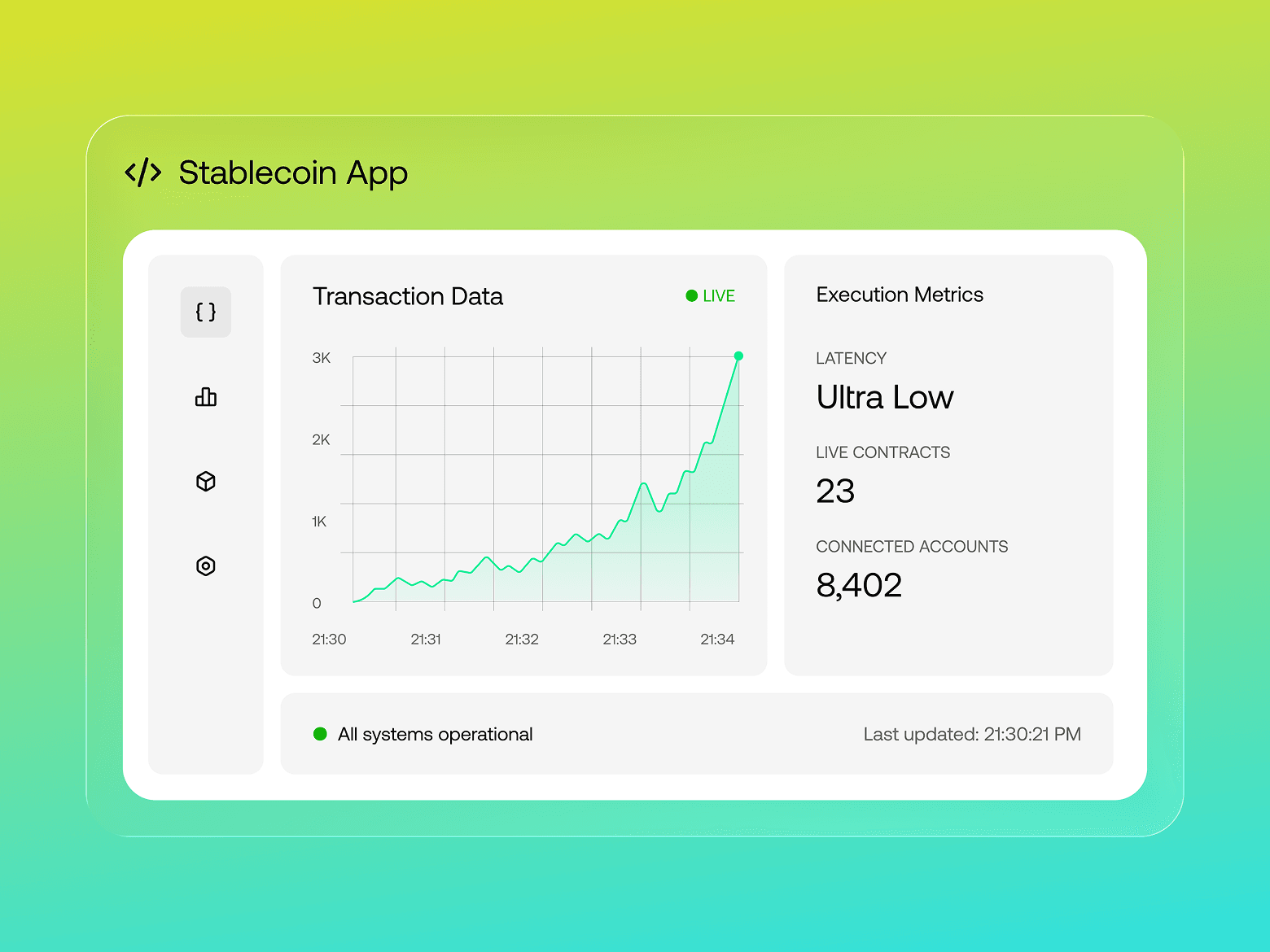
Faster time to market
Write performant apps in Solidity, Rust, C/C++, Move, and AssemblyScript, leverage mature libraries and developer workflows, and bring products onchain faster without having to rebuild everything. Maintain full compatibility with the EVM ecosystem and liquidity.
Put to the test by real teams
Fiet uses Arbitrum to bring reserve-backed liquidity onchain, letting institutions keep capital in existing treasury, custody, and exchange systems while committing verified reserves to support market activity.
Edge Chain is built to separate high-speed trading execution from standard DeFi logic so trading can stay fast and reliable during periods of elevated market activity.

Rise uses Arbitrum to power global payroll and cross-border payouts with deep stablecoin liquidity, near-instant settlement, and lower costs that make small and mid-sized disbursements more economical.
Build high-performance financial products with predictable costs
Talk to our team about how Arbitrum can support the performance and cost profile your business needs.
Frequently Asked Questions
Why should institutions care about performance beyond throughput?
Because teams are judged in the most stressful moments, not the quiet ones. Any network can look good when demand is low and fees are stable. The harder question is whether the product stays usable when activity spikes, multiple workflows hit at once, and users need to act quickly. Arbitrum is designed to keep experiences responsive, execution smooth, and costs more predictable when conditions are most demanding.
Can Arbitrum be configured for our product and performance requirements?
Yes. That applies at both the app layer and the chain layer. Teams building applications on Arbitrum can improve user experience through social login, transaction sponsorship and batching, and user policies without launching their own chain first. Explore ZeroDev for a good example of how apps can make the user experience more performant on Arbitrum. For teams that need deeper control later, Arbitrum chains can also configure settlement speed, cost parameters, throughput, latency, sequencing, and execution environment.
Why does the execution environment matter for performance?
As financial products become programmable, more of your business moves into code. Arbitrum makes it practical to run richer logic onchain with more efficient execution, broader programming ecosystems, and stronger safety for complex applications than competing blockchains. Read the docs to learn more.
How does Arbitrum help keep transaction costs predictable?
Arbitrum prices transactions based on the network resources they use, and this approach, called Dynamic Pricing, helps transaction costs rise more smoothly during busy periods while users still see one simple transaction cost.
Read the docs and this performance analysis to learn more.Can Arbitrum handle peak transaction volume without degrading the experience?
Predictability is essential for modern financial workflows. Whether handling capital market trades, payroll runs, or global remittances, Arbitrum is engineered to support these processes simultaneously without compromising performance or creating cost uncertainty.
Discover the full suite of Arbitrum features helping businesses bring their products to life.



Stay in touch


